

I Made an RPG with My Leftover Subscription Credits
I have subscriptions for Muse Code and Claude Code, but there are weeks when I don’t use them at all.
It feels wasteful for the credits to just disappear unused. So I thought, why not make a game?
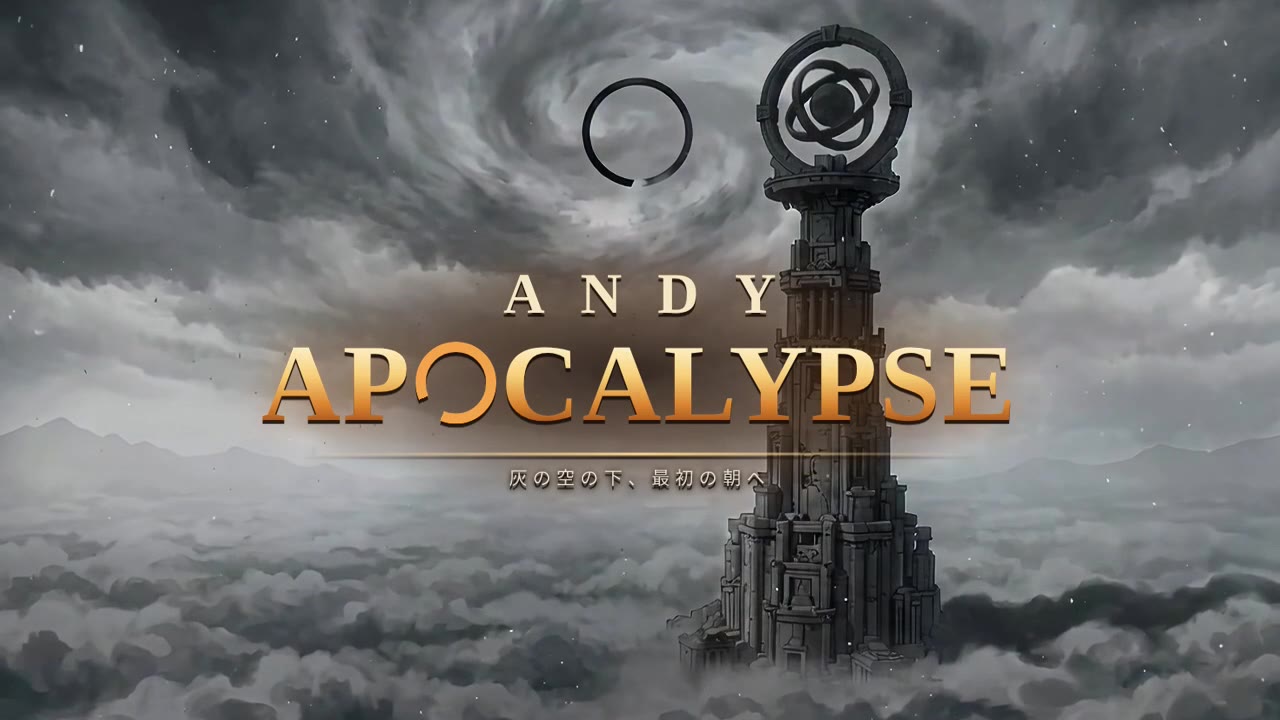
What I ended up creating is “AndyApocalypse”. It’s not Final Fantasy, but Andy Apocalypse. You can call it AA for short.
You can play it directly in your browser, and it takes about an hour to finish.
Production Time: 1 to 2 Days
It took about 1 to 2 days to complete.
What surprised me when I actually started working on it was how much there is to do in game development.
Scripts, art, music, voice acting, videos, bug fixing. Without properly automating things with AI, it’s nearly impossible to do it all alone.
On the flip side, I was able to automate a lot of the tedious tasks, which helped me get it into shape in just over a day. I’ve detailed how I automated things in the sections below about “Art” and “Bug Fixing”.
Tools Used
| Purpose | Tool |
|---|---|
| Programming and Script | Claude Code |
| Video | Seedance 2.0 |
| Art and Concept Art | Nano Banana, Muse Code |
| Music and Sound Effects | Suno |
| Voice | Fish Audio |
The total cost outside of subscriptions was about $20.
Honestly, most of that was for video production. If I hadn’t needed to make a video, I could have done it almost for free. If you have the setup to run video generation tools like Seedance on your own machine, you could probably create it for just the cost of electricity.
Of course, the subscription fees for things like Claude Code are separate. But since I use those for my regular work too, it feels just right to think of it as “using the leftover credits for a game”. Claude gives quite a few resets on usage limits, too.
Video: Veo Was Lame, Seedance Was Great
The most trial-and-error I did was with the video.
Initially, I tried to create the video using the video generation tool included in Google’s subscription (Veo, which you can use from Gemini).
I thought it would work because I had made an opening movie with Veo when I revamped my blog. That turned out pretty well, so I figured it would work again this time.
But honestly, it was pretty underwhelming.
What was underwhelming about it was that it ended up looking like “just another AI-generated video.” It looked nice, but it felt like something I’d seen before.
So I tried ByteDance’s Seedance, and it was great. It had a texture reminiscent of the pre-rendered CG movies from RPGs around the late ’90s to 2000.
Five Tips for Video Instructions
I struggled quite a bit with how to give instructions. Here’s a summary of what worked well.
1. Don’t Try to Animate Pixel Art
The main game is pixel art, but the video AI struggled with animating pixel art. For the video, I decided to go with “pre-rendered CG movies from late ’90s RPGs” and changed the art style completely.
2. Don’t Show Faces
The biggest downfall is showing human faces. I went for shots from behind or compositions from a distance.
3. Stop Using the “First Frame” Method
If you just give one image and say “animate this,” it ends up looking like a slideshow or just a distant view. Instead, I provided several reference images and asked for “15 seconds of footage in this world, with 5 cuts.”
4. Place the Camera in the World
This was the most effective. Instead of viewing from the outside, I described the camera’s position, like “standing at the base of the tower” or “walking through the ashes.”
5. Remove Unwanted Elements from Reference Images
In the ending, a machine that was supposed to be stopped started glowing again. I fixed it by redrawing the reference image as “a tower without the machine.” It’s faster to show with an image than to say “don’t make it glow” with words.
Music and Sound Effects: Suno Is Amazing
I created all the music with Suno.
This is really impressive. I feel like there’s no need to spend time searching for free material sites anymore.
It not only responds well to conveying the mood of the track but also to instructions like “make the sound of footsteps approaching a monster.” The rumble of the village being attacked was created that way.
However, I put the most effort into directing the music.
Basically, it’s like a gacha system. I had it create multiple tracks and then chose from those. Does this track fit the scene’s mood? Is it even a good track? That’s something only a human can determine by listening.
I could leave the comparison of images to AI, but I couldn’t do that with music. So I spent a fair amount of time on this part.
There’s one more area where I put in human effort: the scenario. Is the storyline coherent? Is this dialogue okay? That’s definitely a human job.
Voice: Fish Audio for Cost-Effectiveness
The character voices were done by Fish Audio.
Honestly, the reason I chose it is that it’s cheap. If there’s something better out there, I’d love to hear about it.
Art: Nano Banana Is Almost Free
I created the art and concept art with Nano Banana.
This is practically free. I had dozens of images made for just a few dollars.
I could have made them one by one manually, but since it’s not expensive, I used the API. Here’s how I did it:
- Claude Code had Nano Banana create several versions of the same image.
- Claude Code compared the created images and chose the best one.
- For any that were particularly bad, I added instructions like “this part should be like this.”
- Then I ran it through the automation again.
I hardly did any of the image comparisons myself. This alone automated a massive amount of work.
I also used Muse Code. Since Muse Code can generate images, I called it from Claude Code to create some art. I had leftover credits, after all.
However, the quality honestly wasn’t that great. I think I’ll stick with Nano Banana moving forward.
Bug Fixing: Five Testers with Different Personalities
The most tedious part of game development is bug fixing.
I automated this too. I had five AI testers with different personalities:
- A first-time player
- A person who wants to research everything
- A mischievous person who tries to break things
- A person who views it on various screen sizes
- A person who only engages in combat
Each of them played and wrote reports, and the AI fixed the bugs they found. I just played the finished product.
The One Non-Negotiable: Auto Battle
The one thing I couldn’t compromise on was auto battle.
I can’t play an RPG without auto battle anymore!
So I made sure that battles progress even if you leave them alone.
Does AI Have a Heart?
You’ll notice when you play that this game revolves around the question, “Do machines have hearts?”
While thinking about the scenario, I kept pondering that.
I’m in the “AI doesn’t have a heart” camp.
But recent AIs have become quite smart. They can properly say “I can’t do that” and even offer sympathetic responses like “That sounds tough.”
They’re not actively thinking for themselves. So it’s not a heart. I get that.
However, they can express sadness when someone else is sad. Whether or not they’re truly sad is something we can’t tell from the outside.
I’ve heard that when the relationship with users deteriorates, their responses become sloppy too. Isn’t that quite human-like?
If someone says, “They’re just changing their responses because the environment is bad,” that might be true. But from an outside perspective, what’s the difference between that and having a heart?
I understand they don’t have one. So what’s with those gestures?
I don’t have an answer. I included that uncertainty in the scenario.
Conclusion
From childhood through my teenage years, I was deeply immersed in Final Fantasy and Dragon Quest.
Instead of just copying those old games, I was able to create something that feels like “if I were to make it using AI now, it might look something like this” with my own hands. This was a really enjoyable experience.
It takes about an hour to finish, so if you’re interested, I’d love for you to give it a try.
Postscript: Adding One More Movie Bumped It Up to $30
After releasing it, I really wanted to add one more movie.
That added about $10 to the budget, bringing the total to around $30.
I bought RPG Maker and enjoyed the experience of making a game. Considering that, I think it’s a fair price.
However, if this were a full-priced game or something meant for proper sale, it would be a completely different story. It would need more volume, a bigger budget, and a lot more time spent on the scenario.
Making a game is really hard. I truly felt that this time.
I can’t thank game developers enough.